
A couples budget without combining everything
Build a shared plan for the costs you manage together while keeping personal spending, accounts, savings, and financial goals separate.
💰 Monthly Net Income
Net / After-TaxMonthly Allocations
🏠 Housing & Utilities €0
🛒 Food, Transport & Living €0
👶 Children & Family €0
💳 Debt & Loans €0
📈 Savings & Investments €0
Budget Summary
You have allocated 100% of your income.
50/30/20 Target Comparison
Adjust numbers above to receive instant personalized optimization tips for your budget.
Start with the household
A couple's budget does not have to be one giant personal budget
The first decision is what belongs to the household. Once that boundary is clear, budgeting together becomes much easier.
Shared costs
Plan for housing, utilities, groceries, household supplies, shared subscriptions, transport, childcare, travel, and other costs you both agree to manage.
Personal costs
Keep individual hobbies, gifts, personal shopping, individual subscriptions, and other agreed personal spending outside the shared budget.
Shared goals
Use the household layer for goals you are genuinely pursuing together, such as a holiday, home project, emergency buffer, or other shared commitment.
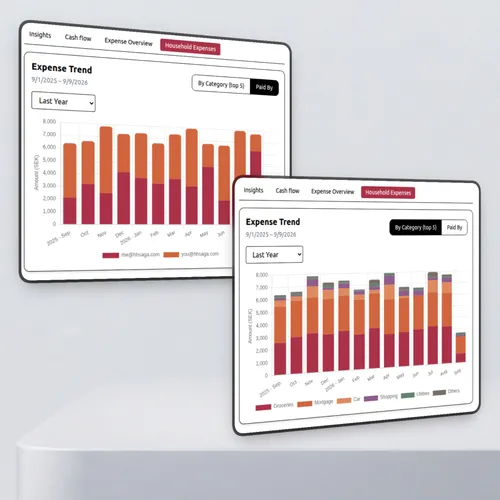
Give the shared part its own numbers
The figures below are illustrative. The useful part is the structure: shared spending is planned together, while personal spending stays outside it.
Shared household expenses
A simple example of what can sit inside the shared budget.
Housing
Rent or mortgage
€1,500
Utilities & internet
Electricity, water, internet
€250
Groceries & household supplies
Food and everyday essentials
€500
Transport
Shared travel and commuting
€250
Shared subscriptions & other
Recurring shared expenses
€150
Shared monthly budget
The amount to plan for together
€2,650
Choose the funding rule
How should a couple fund the shared budget?
The budget tells you what the household needs. A contribution rule determines how the two of you fund it.
50/50
- Each partner contributes the same amount.
- Simple when incomes and circumstances are similar.
- Easy to maintain for recurring costs.
Proportional to income
- Each partner contributes according to their agreed share of income.
- Useful when incomes differ substantially.
- Review the ratio when circumstances change.
Fixed or custom contributions
- Agree on a monthly amount for each partner.
- Useful when you already have a contribution arrangement.
- The household budget can remain shared even if contributions are not formula-based.
How to build a couples budget
List shared commitments
Start with recurring costs that genuinely belong to the household.
Estimate realistic monthly spending
Use recent spending where possible rather than relying only on ideal targets.
Add irregular costs
Include annual, seasonal, maintenance, travel, and other less frequent household expenses.
Choose contributions
Agree on 50/50, proportional, fixed, or another arrangement.
Track actual spending
Compare the plan with what the household actually spends each month.
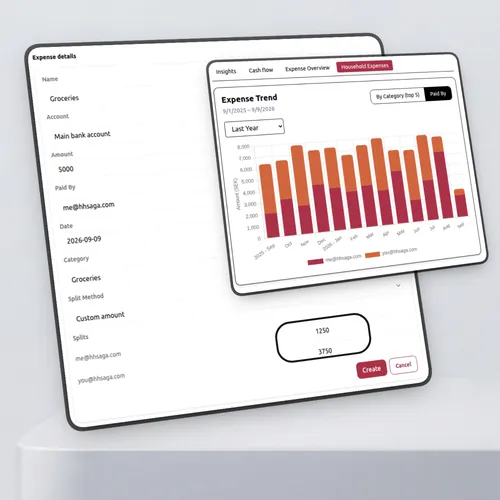
From a budget to an actual household
A budget explains what you expect to spend. Ongoing tracking shows what actually happened.
FAQs
Couples Budget: Frequently Asked Questions
Practical answers to budgeting together, sharing household costs, and keeping personal finances separate.
How do you create a budget as a couple?
Start with the costs you share, such as housing, utilities, groceries, transport, and family expenses. Estimate each cost, account for irregular bills and savings goals, then agree how much each partner will contribute. Keep personal spending outside the shared budget unless you both decide otherwise. Review the budget when your income, expenses, or circumstances change.
Can we budget together without combining our bank accounts?
Yes. A couples budget is an agreement about how you plan and fund shared expenses; it does not require you to merge your bank accounts. You can keep your salaries and personal spending separate while maintaining a shared view of household costs, contributions, and payments.
What should be included in a couples budget?
Include the expenses you have agreed to manage together. These might cover rent or mortgage payments, utilities, groceries, household supplies, insurance, childcare, transport, and shared subscriptions. Plan for annual bills, repairs, holidays, and other irregular costs so they do not catch you off guard. Personal purchases and individual savings can remain outside the shared budget.
How should couples divide the cost of a shared budget?
There is no single contribution rule that suits every couple. You might contribute equal amounts, divide costs in proportion to your incomes, agree on fixed contributions, or choose another arrangement that fits your circumstances. Decide on the rule together before using it to fund your shared expenses.
What if one partner earns more than the other?
A shared budget does not mean both partners must contribute the same amount. Some couples split shared costs equally; others contribute according to their share of combined income or agree on another arrangement. Discuss what feels sustainable for both partners, taking account of income, responsibilities, and financial commitments.
How much should each partner contribute to the household budget?
Start by adding up the expenses you have agreed to share, then decide how to divide that total between you. You could contribute equally, contribute in proportion to your incomes, or agree on another split that fits your circumstances. Once you choose a method, calculate each partner’s amount and review it when your income or shared costs change.
Should we include personal spending in our shared budget?
Only if that is what you both want. Many couples budget jointly for household costs while keeping clothing, hobbies, personal subscriptions, gifts, and individual savings separate. Agreeing on what counts as shared helps prevent personal purchases from unexpectedly affecting the household budget.
How do we handle expenses when one partner pays upfront?
Record the expense, who paid it, and how the cost should be shared. The partner who paid may have covered more cash upfront, but that does not necessarily mean they owe more overall. Tracking actual payments alongside your agreed contributions helps you understand the household balance and settle up when needed.
How much should we set aside for unexpected and irregular costs?
Start by listing costs that do not arrive every month, such as annual insurance, repairs, travel, and seasonal expenses. Estimate their yearly total and set aside a monthly amount where practical. Keep emergency savings distinct from money needed for predictable bills, and agree whether these funds are shared or held separately.
How often should we review our couples budget?
A monthly check-in is a useful starting point: compare planned costs with actual spending, look ahead to upcoming bills, and adjust contributions if needed. Review the budget sooner after a significant change, such as a new job, a move, parental leave, a change in childcare costs, or a change in income.
What if we cannot agree on a couples budget?
Start with the expenses you both recognise as shared and work out a realistic plan for those first. Discuss priorities, personal spending boundaries, and what each person can comfortably afford rather than assuming every cost must be split the same way. You can begin with a simple arrangement and revisit it as your circumstances change.
Build the shared part. Keep the rest yours.
Create a household budget for the money and commitments you actually manage together.